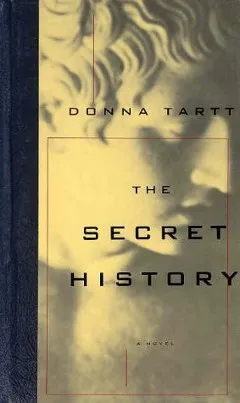
The Secret History
Book review
reputation narratives
This post contains spoilers.
Read this one for book club at work. I liked it, but didn’t love it. I was captivated in the beginning but found the second half to be dragging on longer than it needed. It wrapped up nicely at the end though, and I walked away satisfied with the closing act.
Some thoughts:
- A core theme that stands out is on image and reptuation. I’m sure there were plenty more, but this is the only one that comes to mind right now.
- I feel like Henry was an amalgamation of the narratives that everyone built around him. He was reserved but willing to fight if crossed or pushed to it. Intelligent and strong. The tough guy with a soft heart. The leader and alpha of the pack. But he pulled every string to influence those narratives. He portrayed himself to be what he wanted them to see and it worked. At least, until it didn’t. That’s why I liked the ending. A true character development, even if there were no indicators leading up to such a thing. Maybe it was supposed to feel like a twist. I didn’t really feel it, but I liked that, in the end, he lived up to what he saw himself to be.
- I liked what he said about Julian near the end, too. He saw Julian as a father figure. All the students did, really. But their perspective of Julian was shaped just as much by Julian himself. He has a reputation — Richard sprinkled pieces of it throughout the entire story — and he really did protect it in the end. It was an asymmetric relationshp the whole time. Maybe that’s why he was so selective of his students; only those willing to see him on his terms would seek him out.
- The bits about the car mechanic blaming Arabs for Bunny’s disappearance was a bit on the nose, but relates directly to the theme of image.
- Speaking of the mechanic, it’s interesting how everyone used the tragedy as a launchpad to try and capture the sudden attention on the town and rediect it toward themselves. It’s very relevant, of course. It was also one of the book’s rare moments of fun. It felt a bit like the media frenzy that tends to flood the town of Woodsboro after a Ghostface killing in the Scream series.
- I’m not sure what to think of Richard. He was enamored by the group at the very beginning. Even as their facades began to crumble, which Richard was very keen on, Richard found himself gravitating further toward them rather than away from. Maybe he saw himself as one of them, not of their facades, but of their realities: lost, broken, and more than a hint of narcissistic. Still, I don’t know what to think of him. I can’t say he grew into much of anything by the end. If anything, it’s more like his facade broke down over the course of events and his character was revealed rather than developed. He was addicted to this group of addicts.
- Richard quoting Crime and Punishment was pretty funny (in a good way) and I’m glad the author referenced it because the story would have felt a little emptier otherwise.
- Bunny’s family was another, more obvious, example of focusing on image and reputation. A lot of their involvement post-murder felt at times either performative or incredibly shallow, but at the same time I think they deserved to grieve in however way they needed.
- As annoying and belligerent as Bunny was, he seemed to be the only one in the group with a conscience and it’s unfortunate that he had to die in order to protect Henry’s reputation, and yet Henry still died anyway with his reputation forever protected as a result. Life is unfair, and I guess that’s part of what makes this a good story.